
Food is more than simply the act of eating. It holds memory and comfort, supports rituals, and tells stories of migration, class, struggle, and care. Food is one of the first ways we form relationships with others and it weaves us into everything that lives and fades. Through food and eating, we take the world into ourselves.
In As Necessary as Bread – From Land, to Kitchen and Table Stedelijk Museum Schiedam, in collaboration with curator Rawad Baaklini and researcher Lieneke Hulshof, explores how food connects us to the land, labour, rituals and memories. Through three themes – Land, Kitchen and Table – contemporary and renowned artists demonstrate how food is intertwined with power, migration, care and cultural identity. With over seventy works by fifty different artists – ranging from paintings, sculptures and photographs to video installations – their personal stories come to life. For example, artist Samah Shihadi depicts her family preparing grain, a tradition closely linked to daily life in Northern Palestine. Moreover, filmmaker Jos van de Putter captures life on his parents’ farm, as a final reminder of an ever-fading image of the Netherlands.
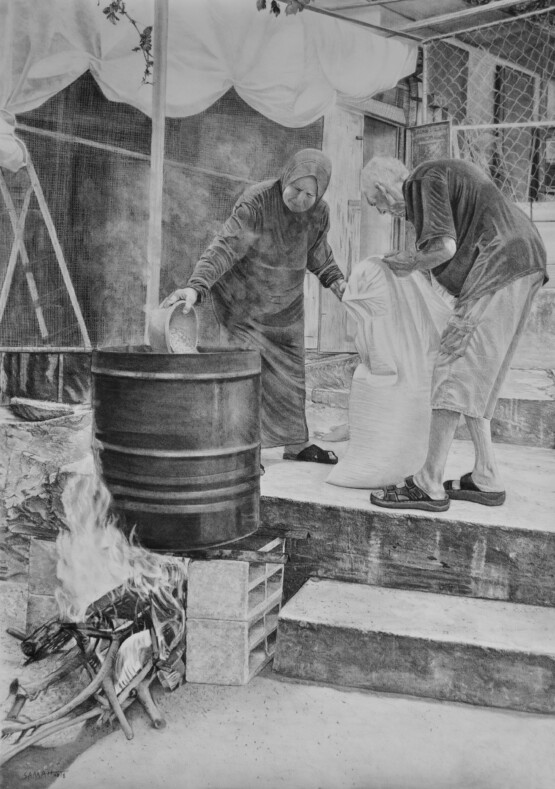
Samah Shihadi, ‘Wheat’, 2018, pencil on paper, 100 x 70 cm, photo Tabari Art Space
At its core, the exhibition is about the encounters between ingredients and the people who grow, prepare, serve, and eat them. Food carries far more than nourishment alone. It holds memory, care, labour, attention, and togetherness. Ultimately, food speaks to who we are as human beings.
Anne de Haij, director Stedelijk Museum Schiedam: “Art and food have always been closely linked. In this exhibition, we see tempting oranges, game dishes, ice creams and kebabs. But each work of art represents so much more: it embodies the story or emotion of an entire community.”
Rawad Baaklini, curator: “To eat is to be condemned to taste. The same is true of art. In both, every encounter asks us to judge, desire, remember, and position ourselves.”
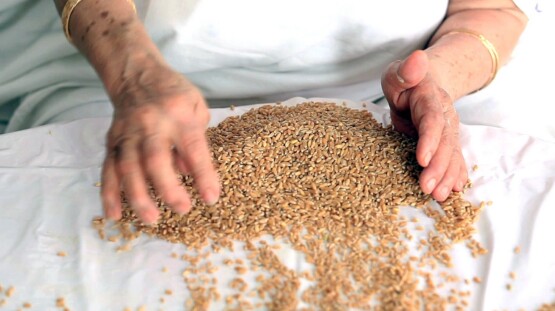
Ymane Fakhir, ‘Handmade’, 2012, videoprojections, edition 1/5, collection Frac Sud – Cité de l’art contemporain, © Adagp, Paris, 2026
From land, to kitchen and table
That food gives rise to heartwarming stories is beyond doubt. The question is how such stories can be told within an exhibition, how they move through artworks, and how they reshape the way historical works are seen and understood. The exhibition brings together works that reveal the emotional power of food as well as the relationships between people, animals, and what nourishes them. It unfolds across three chapters.
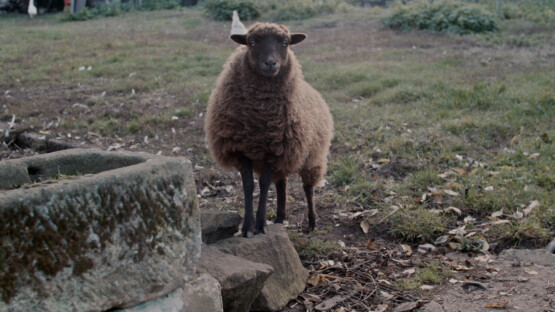
Astrid van Nimwegen, A Few Mornings, an Evening, 2024, film, video projection, 71 min (HD / 25fps), courtesy of the artist
Land – the foundation of our food
The slow-paced yet hard life on a foggy farm, the hard-working faces of farmers, but also the harsh reality of industrialisation and its consequences for the land and animals. The chapter ‘Land’ focuses on the people, animals and landscapes that form the basis of our food. The works show how agricultural traditions are disappearing, how animals are reduced to objects, and how humans and animals live in shared ecosystems.
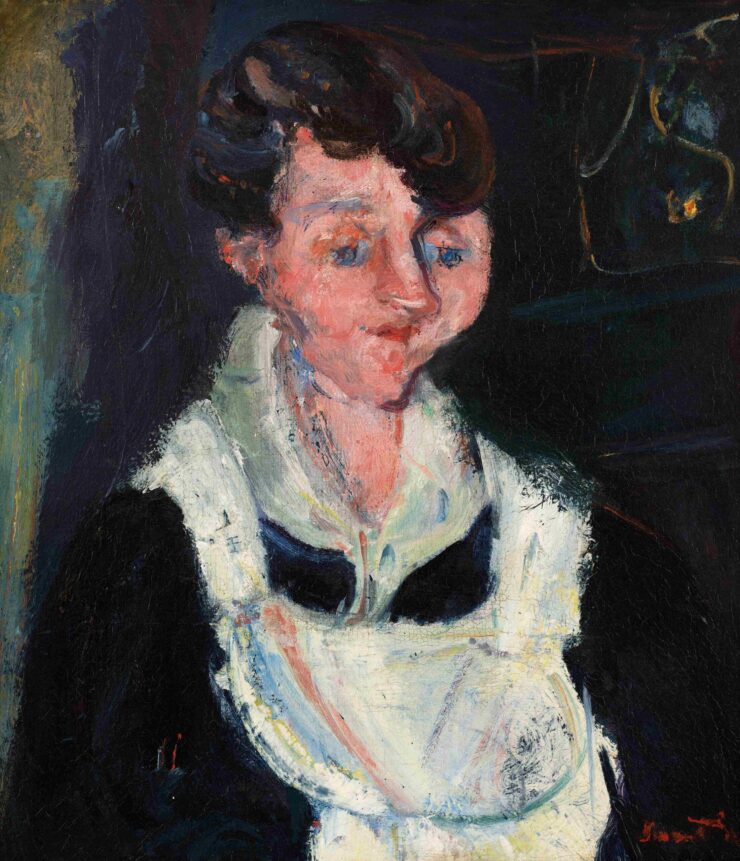
Chaïm Soutine, 'Jeune Servante' (Young maid), ca. 1933, oil paint on canvas, 45.5 cm x 40.5 cm, collection Ben Uri Gallery, London, 2012-26, photo Bridgeman images
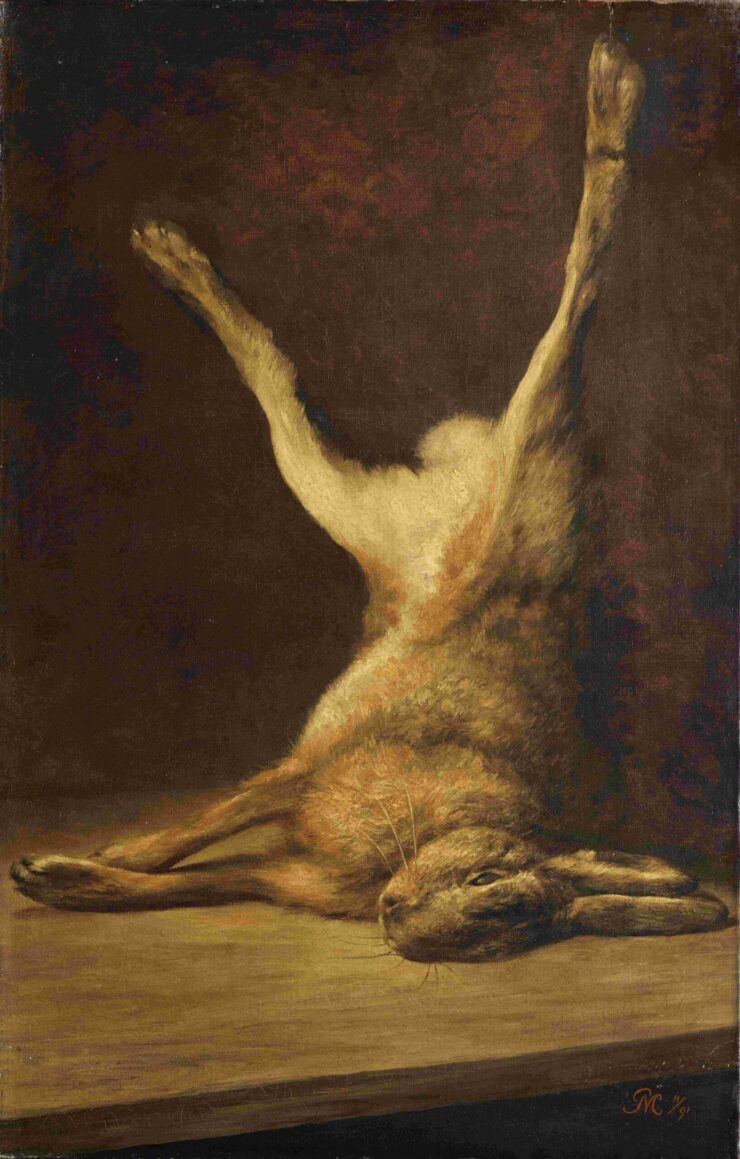
Piet Mondriaan, 'Geschoten Haas', 1891, oil on canvas, 80 x 51 cm, photo Kunstmuseum Den Haag
Kitchen – Labour, Care and Resistance
The maid, who always stands quietly in the background. Preparing food in a warm, homely kitchen or on the floor alongside many other women. The way in which people prepare meat – either with great care and attention or, conversely, in an industrial manner. In the second chapter, ‘Kitchen’, the focus shifts to the preparation of food. Who cooks, who cares and who does the work – and under what conditions – both in the traditional, domestic kitchen and in the large-scale, industrial kitchen?
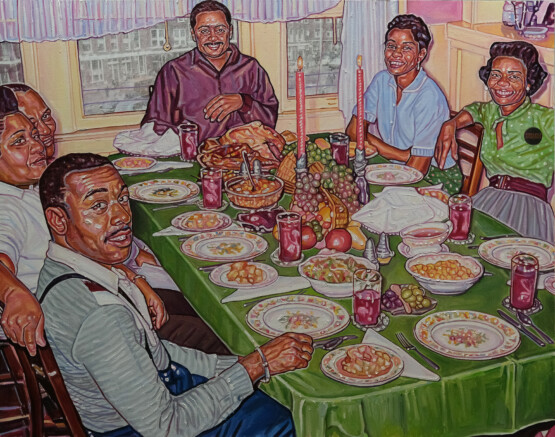
Esiri Erheriene-Essi, ‘The Table We Carried With Us (An Afternoon in Zuid)’, 2026
The Table – Rituals, Power and Shared Stories
At the table, we enjoy ourselves, meet friends and strangers, and celebrate life. Or is it not always so rosy? The table is just as much a gathering of ingrained family dynamics, painful memories and group formation, which can also exclude some people. The chapter ‘Table’ therefore focuses on eating as a social ritual. Who sits at the table, who sets the rules, and what memories are shared?
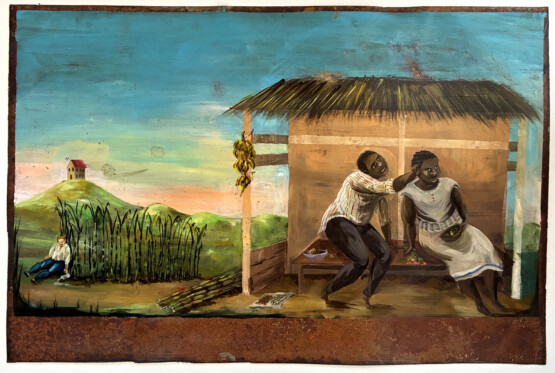
Daniela Ortiz, La hoz y la Consecha, 2026
Artists from all corners of the globe and throughout the ages
As Necessary as Bread presents work by artists from all corners of the globe and throughout art history. The participating artists are: Anna Abrahams, Arash Fakhim, Arjan van Helmond, Astrid van Nimwegen, Bertien van Manen, Camille Henrot, Chaïm Soutine, Charley Toorop, Co Westerik, Daniela Ortiz, Eleye Boerenkamps, Esiri Erheriene-Essi, Francesca Scalisi & Mark Olexa, General Idea, Gijs Assmann, Hadassah Emmerich, Hala Tawil, Ina van Zyl, Ishtar Hsu, Janis Rafa, Jos de Putter, José Carmona, Kasper Bosmans, Magali Reus, Martin Parr, Martha Rosler, Maurice Scheltens, Mika Rottenberg, Najla El Zein, Natascha Zaludovà, Pieter Bruegel the Elder, Piet Mondrian, PolakVanBekkum, Rayyane Tabet, Rembrandt, Richard Billingham, Samah Shihadi, Scheltens & Abbenes, Serge Kliaving, Sophie Calle, Stéphanie Saadé, Ster Borgman, Suze Robertson, Tarik Kiswanson, Walid Raad, Willem Bastiaan Tholen, Yassine Ben Abdallah, Ymane Fakhir, Zhanna Kadyrova, Zeger Reyers and Zina Saro-Wiwa.
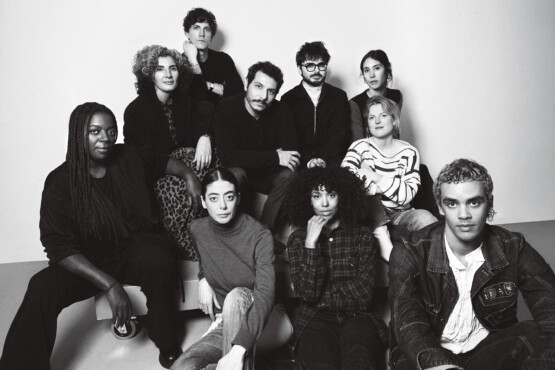
The group of chefs together with the curators, photo Meinke ten Have, 2026
Co-creation with chefs and experts
Yet the exhibition did not begin with only artworks. It began in kitchens, around tables, and through conversations. Guided by curator Rawad Baaklini and associate research curator Lieneke Hulshof, eight chefs, each with different cultural and professional backgrounds, came together to share their knowledge and memories: Patricio Vomend (owner of Restaurant Masa, Rotterdam), Nadia Zerouali (chef and television personality), Manuela Gonçalves Tavares (chef at Nieuwe Instituut Rotterdam), Cesar Majorana (wine influencer), Micheline Nahra (Chef and food designer), Thirza Prak (botanic expert, herbalist), Naiara Sabandar (chef at Restaurant Oficina), and Jason Tjon Affo (cookbook author).
They spoke about bread that was baked with care each day and shared with new neighbours. About a grandmother’s healing soup whenever you felt unwell. About sweets secretly hidden beneath the bed. About the smell of strawberries that recalls seasonal farm work. About the nostalgia of fresh milk, straight from the farm. About empanadas whose aroma carries you back to childhood. It is precisely these kinds of memories that inspire them to work in kitchens and restaurants. What they experienced as children continues to travel with them through their work in hospitality and food culture. During the different sessions, the group explored together what a contemporary exhibition about food and food cultures in the Netherlands could look like, feel like, smell like, and taste like.
As Necessary as Bread – From Land, to Kitchen, to Table is made possible thanks to the Ministry of Education, Culture and Science.

Top image: ‘Stilleven’, photo Meinke ten Have, 2026